The fastest way to choose the wrong acrylic sign is to start with a Pinterest screenshot and ignore the wall it has to live on. A reception logo viewed from three metres away needs different contrast from a desk plate viewed at arm’s length. A salon wall can carry a mirror finish that would be distracting on a clinic directory. A shop counter QR stand needs stability and easy cleaning, not dramatic depth.
Quick selector: which acrylic sign suits which space?
| Space | Strong option | Why it works | What to confirm |
|---|---|---|---|
| Office reception | Layered or raised acrylic logo | Clean depth without turning the wall into a lightbox | Wall colour, logo contrast, stand-off depth |
| Salon / beauty studio | Gold, silver or rose-gold mirror acrylic | Reflective finish pairs well with feature walls and mirrors | Reflection, fingerprints, direct spotlights |
| Clinic / professional practice | High-contrast acrylic letters or panel | Prioritises readability and a calm finish | Letter size, bilingual text, cleaning access |
| Retail shopfront / feature wall | 3D acrylic letters, optionally illuminated | Greater depth and visibility from a distance | Viewing distance, power point, approval requirements |
| Counter / table | Acrylic QR or information stand | Small footprint and easy content visibility | QR scan angle, base stability, printed content |
1. Layered acrylic reception logo
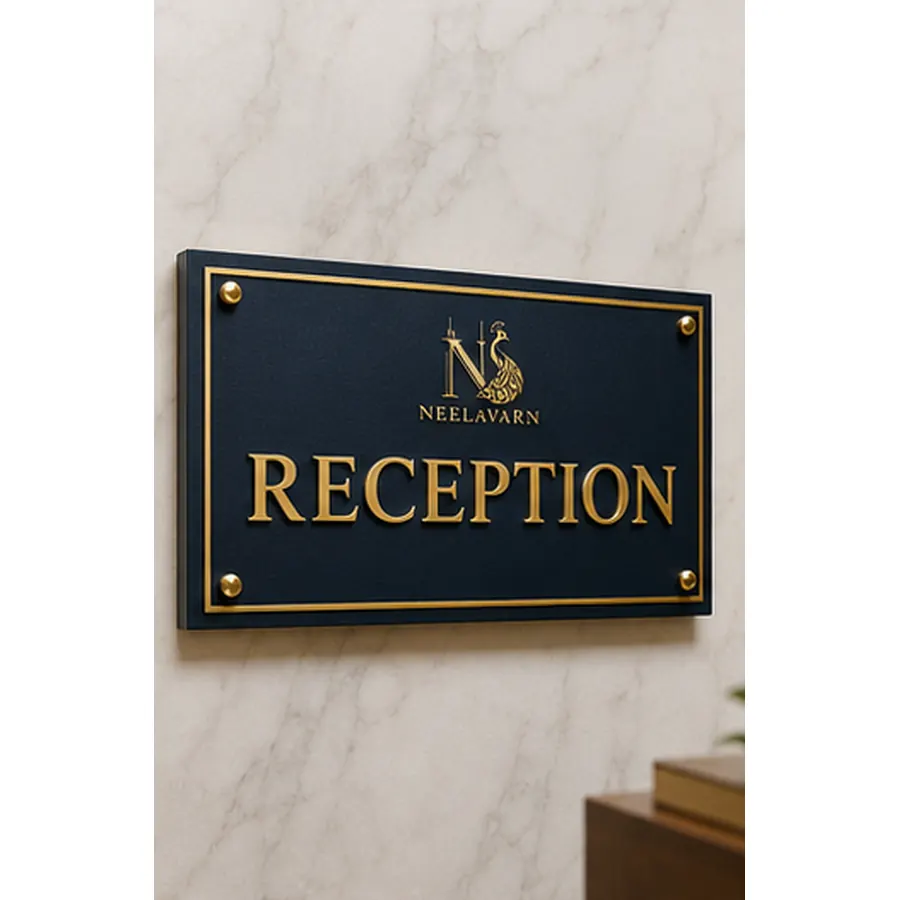
A flat logo sticker can disappear on a large reception wall. A layered acrylic build creates a visible edge and shadow, so the mark still reads when the wall and logo are close in colour. It is particularly useful for corporate offices, clinics and studios where the reception wall needs to look finished without becoming overly decorative.
Specify: finished logo width, wall colour, whether the letters should sit flush or on stand-offs, and the normal viewing distance. Send a straight-on photo of the wall with one known measurement; that is much more useful than saying “medium size”.
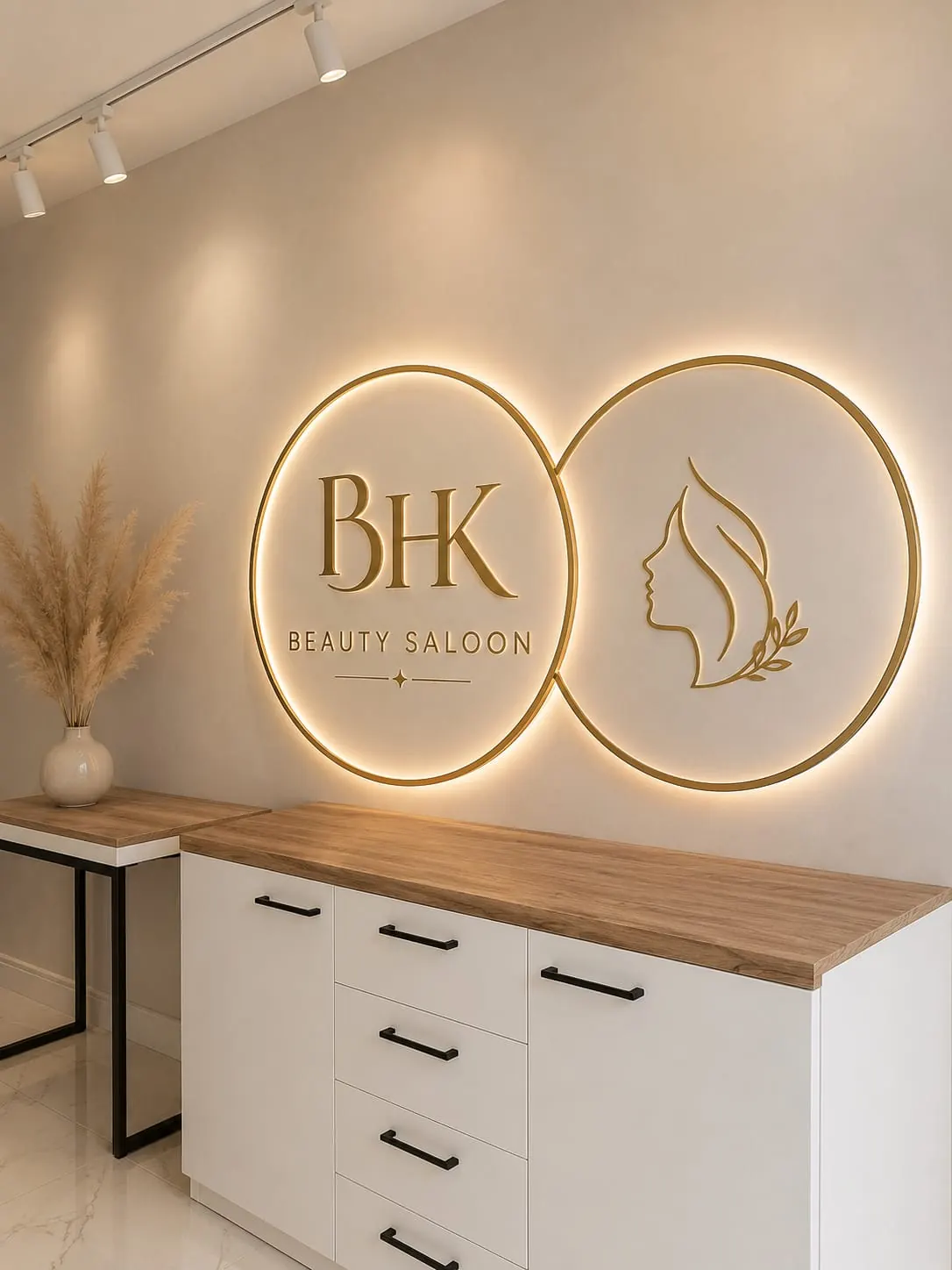
2. Mirror acrylic for salons, spas and beauty spaces
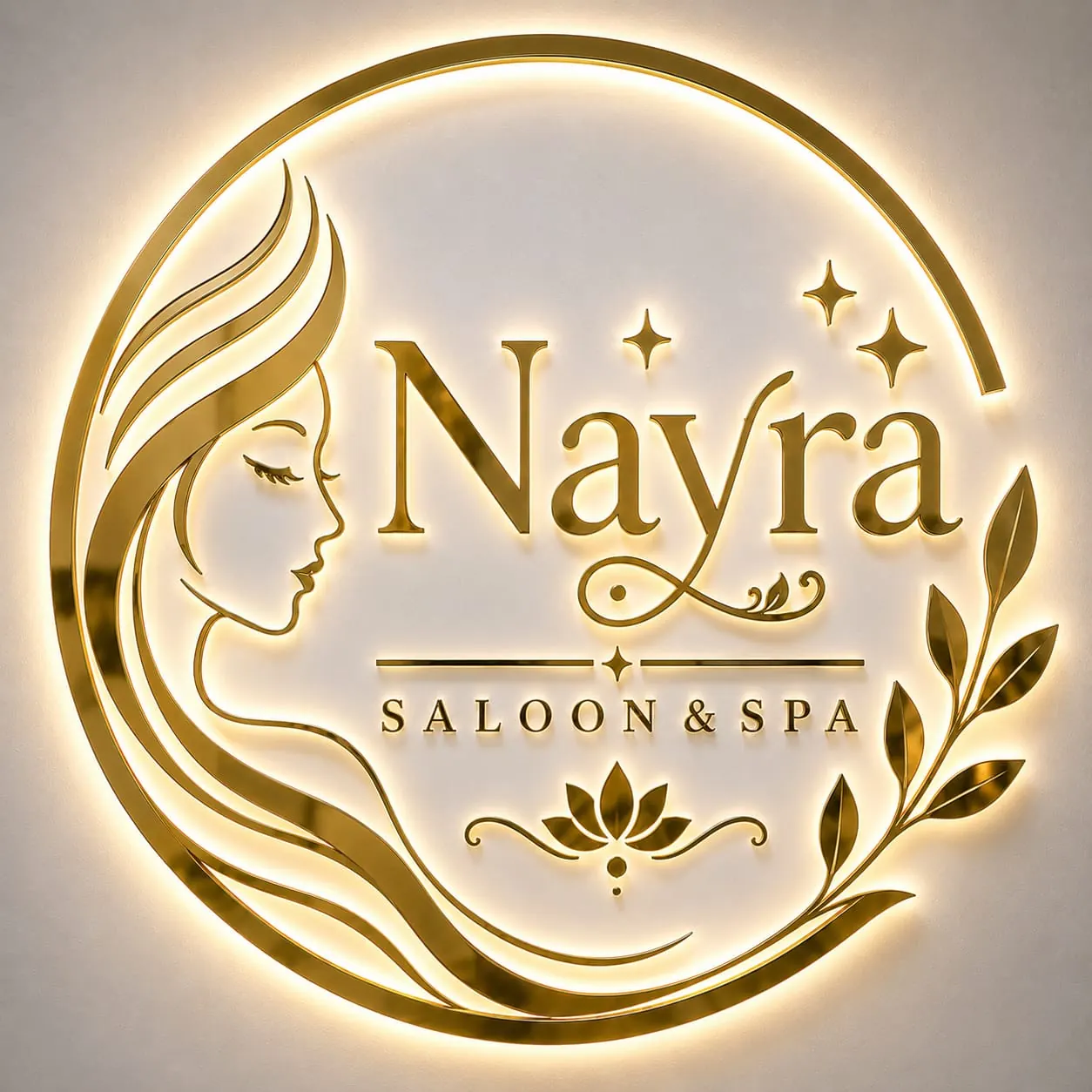
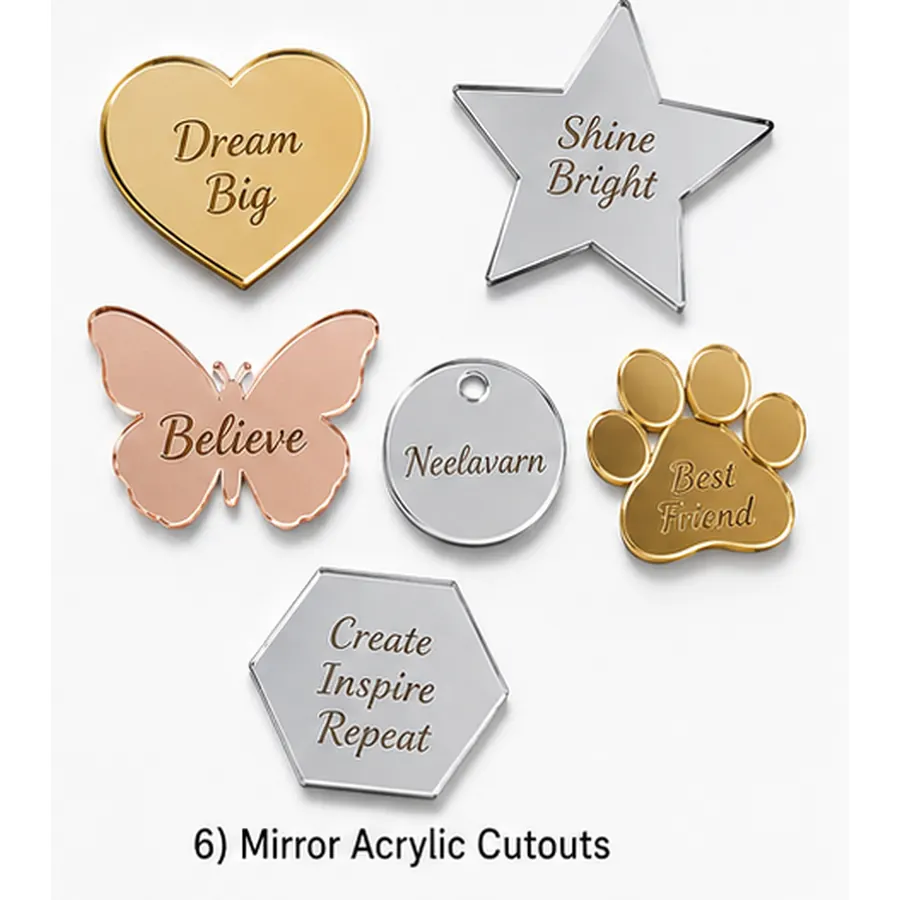
Mirror acrylic earns its place when the interior already uses warm metals, marble, glass or feature lighting. Gold mirror tends to feel warmer; silver reads cleaner and cooler; rose gold works when the interior palette already supports it. The mistake is choosing a mirror finish only because it looks premium in a close-up sample.
Before approving it, check what the sign will reflect. A reflective logo opposite a busy doorway or exposed ceiling can show more visual noise than expected. Also decide how the team will clean the face without scratching it.
3. LED-backlit acrylic for stronger evening visibility
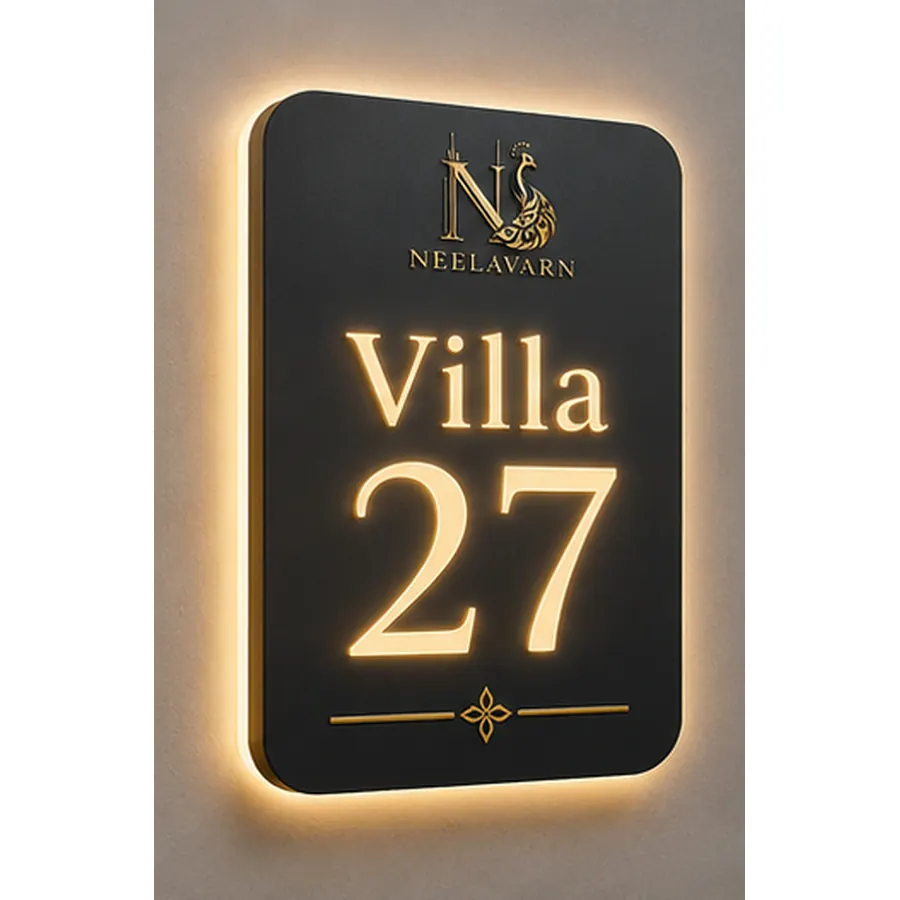
LED does not automatically make a sign better. It is useful when the logo needs separation from a dark wall, the reception operates into the evening, or the sign is expected to act as a focal point in photos. For a small brightly lit reception, non-illuminated raised letters can look cleaner.
Ask where the driver and cable will be hidden before fabrication. A beautiful illuminated logo with an exposed cable route is a design problem, not an installation detail.
4. Clear acrylic panel with printed or cut branding
A clear panel works well when you want the wall finish to remain visible behind the sign. It can carry a logo, department name, opening information or directional content without visually blocking the background. It is also useful when the sign may be replaced later because the complete panel can be removed as one unit.
Clear acrylic shows dust, fingerprints and uneven wall surfaces more readily, so placement and cleaning access matter. For a public-facing counter, rounded corners and a stable base are more important than adding extra layers.
5. Acrylic door and room plates that follow one system
Door signage becomes messy when every room is treated as a separate design. Decide one system for room names, numbers, Arabic/English order, icon style and fixing method, then repeat it. That gives offices, clinics and salons a consistent wayfinding language.
For frequently changing rooms, design the plate so the information insert can change without replacing the complete unit. For permanent rooms, cut or engraved text is usually visually cleaner.
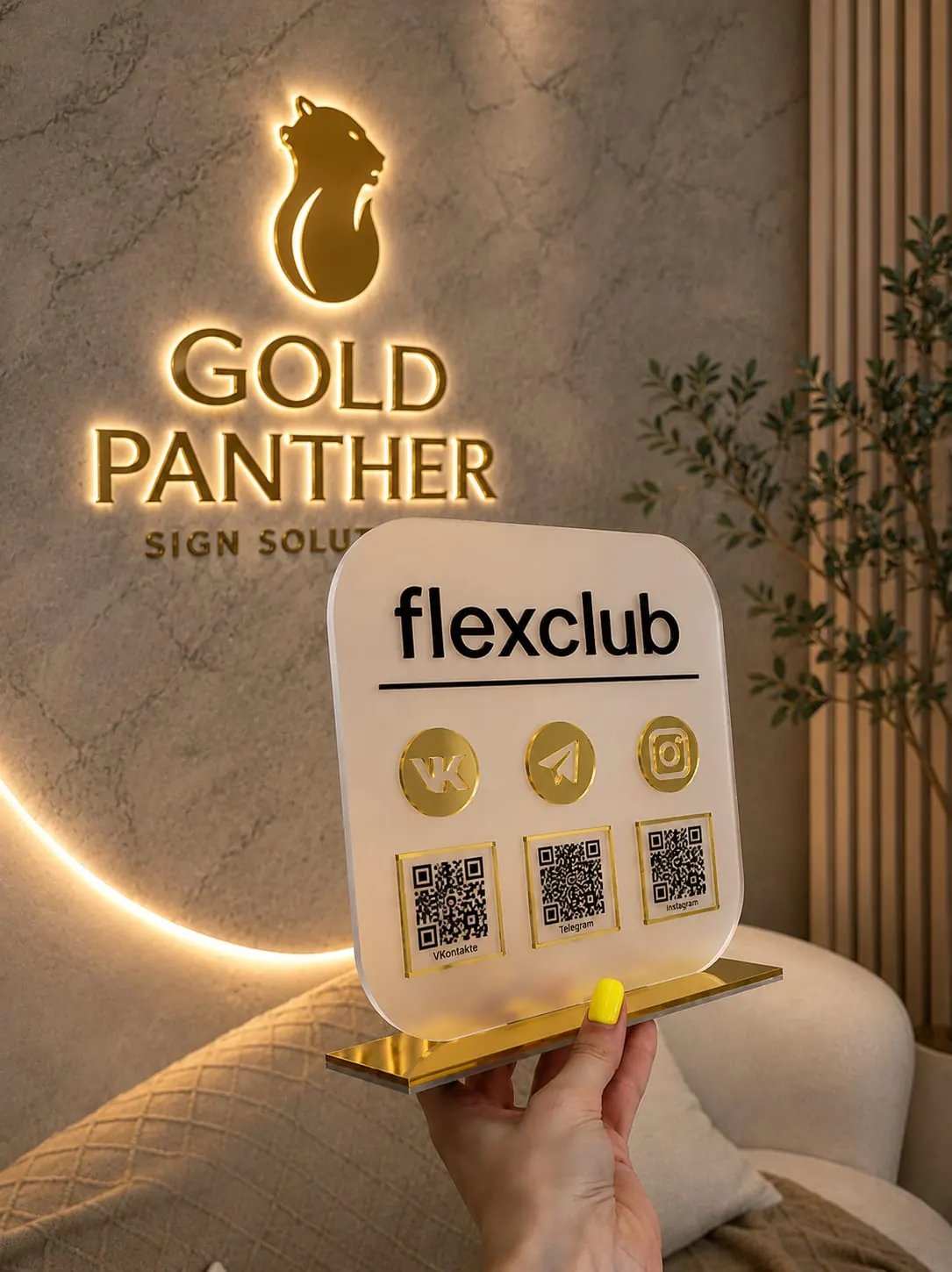
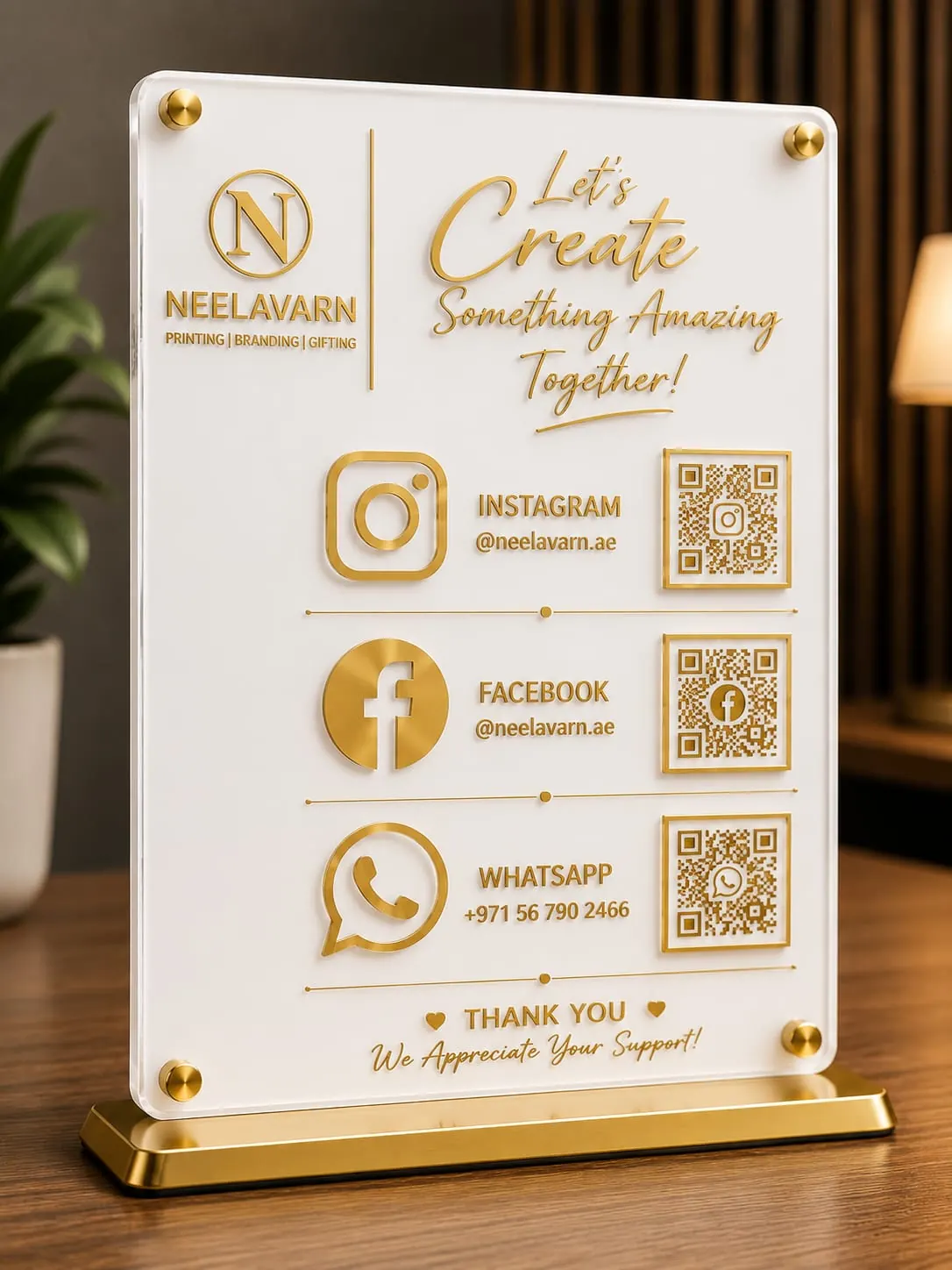
6. QR-code acrylic stands for counters and reception desks
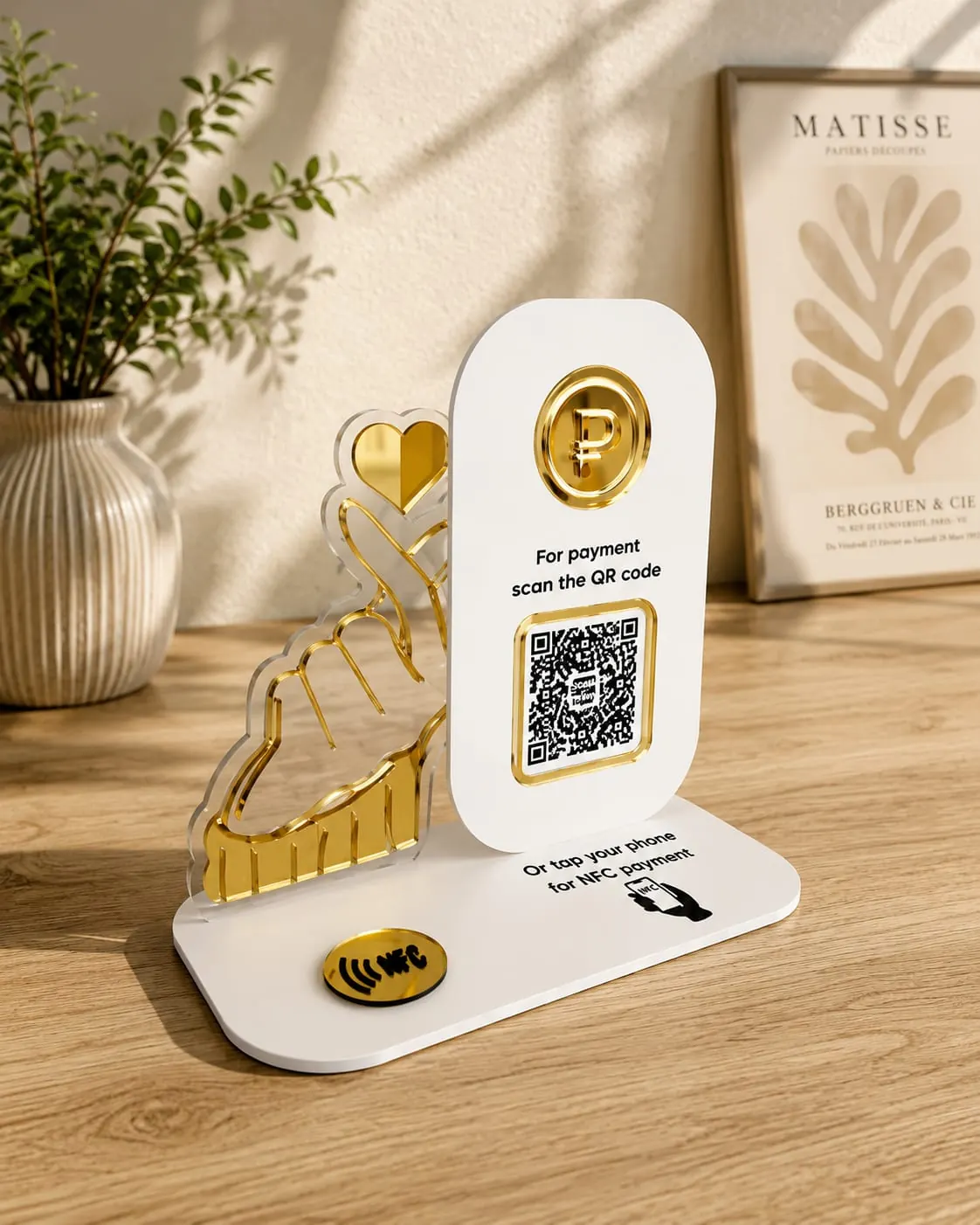
QR stands are useful for menus, Google review links, Wi-Fi, payment pages, booking forms and social profiles—but only if the code scans quickly at the angle customers naturally hold a phone. A QR code printed too small or placed behind high-glare acrylic can make a simple action frustrating.
NEELAVARN’s completed work already includes QR acrylic display pieces, so this is a practical small-format use of the same fabrication skill rather than a decorative add-on.
7. Acrylic menu and information boards
For cafés, event counters and reception desks, an acrylic menu or information board should be designed around update frequency. If prices or items change weekly, a permanent printed board creates unnecessary rework. If the information is stable, a cleaner fixed layout can look more intentional.
For a QR-led menu, keep the headline and call-to-action large enough that customers understand what to do before they attempt to scan.
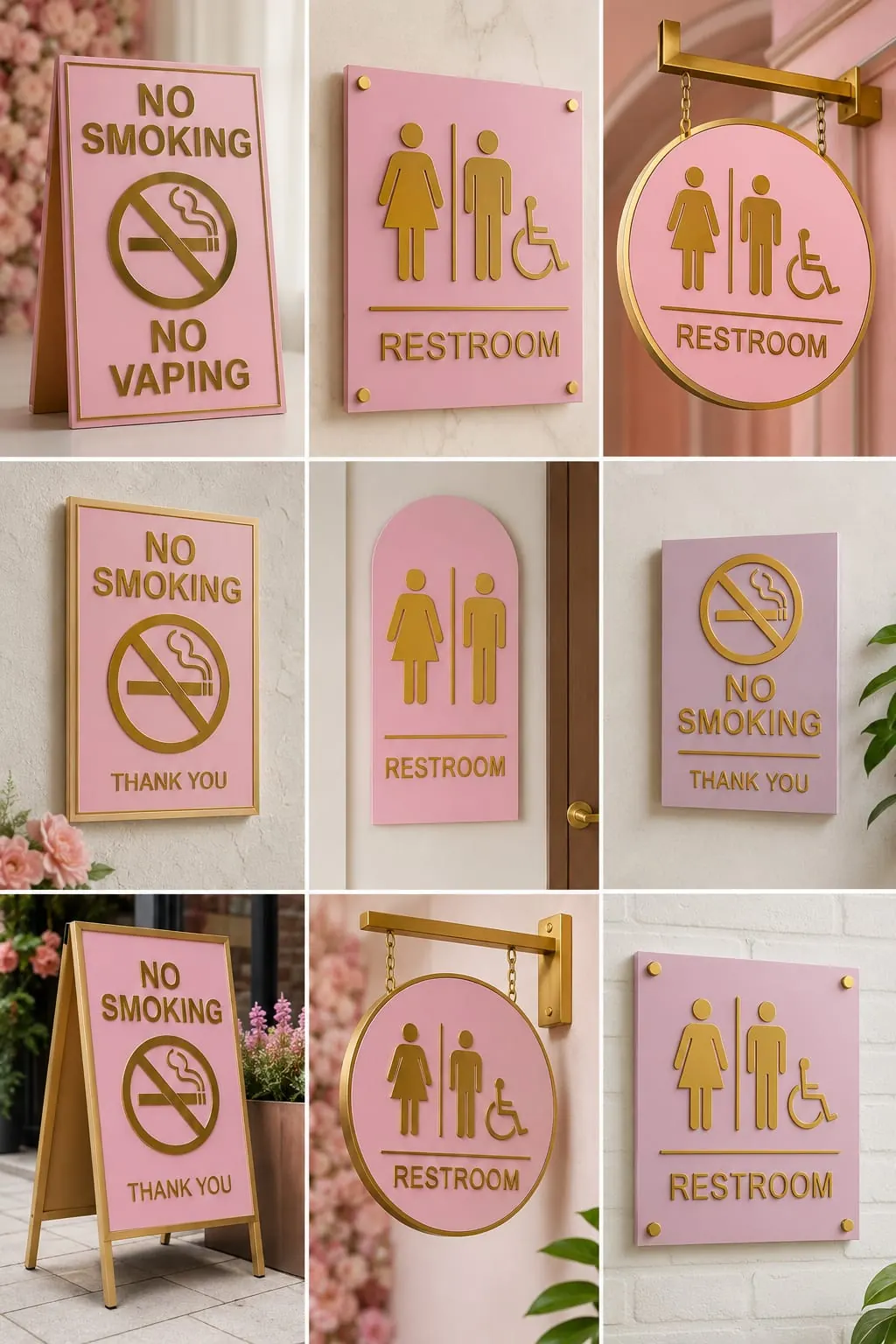
8. Safety and directional acrylic displays
Directional signs are not the place to use low-contrast decorative typography. Arrows, room names and safety instructions have a job: they must be understood quickly. Use strong contrast, predictable placement and consistent symbols. A premium finish is useful only if it preserves that clarity.
9. Bilingual Arabic and English name or brand signage
Do not treat the Arabic line as an afterthought added beneath an English logo. Confirm the final spelling, hierarchy, alignment and overall width in the actual artwork before cutting. Arabic and English text can occupy very different horizontal space even when they communicate the same name.
NEELAVARN’s current acrylic/name-board service already supports Arabic and English text. The safest workflow is to provide final approved copy rather than ask the fabricator to infer spelling from a voice note.
10. Small branded acrylic pieces for appreciation and events
Not every acrylic branding job belongs on a wall. Table awards, appreciation pieces, event thank-you displays and custom desk-name pieces are useful when the object itself is part of the presentation. For these, balance matters: the base should support the height, the name should be readable in a photograph, and the face should not be so reflective that event lighting hides the text.
Before you ask for a quote: send these 8 details
Dubai installation is a project detail, not a final-day surprise
If the sign is fixed to a shopfront, façade or managed property, check landlord, mall, free-zone or relevant authority requirements before final fabrication. Dubai Municipality maintains advertising/signage permit services for signs on buildings, so exterior work can involve more than producing the letters themselves. For interior reception branding, confirm wall construction, access and cable routing if lighting is involved.
NEELAVARN is based in Ajman and offers UAE-wide delivery. Installation may be arranged for suitable custom-art projects depending on size, access, wall surface and fixing method. If your project is in Dubai, include the exact site and installation requirement in the first enquiry rather than after production.
For fabrication options, see NEELAVARN’s acrylic works and signage, printing and laser engraving, or send the dimensions through the quotation form.
Frequently asked questions
What type of acrylic signage works best for a reception wall?
For most reception walls, choose the finish around the wall colour, lighting and viewing distance. Clear or layered acrylic gives a clean corporate look, mirror acrylic is more decorative, and LED-backlit lettering is useful when stronger contrast is needed.
Can acrylic signage be used outdoors in Dubai?
Yes, but the fabrication brief should specify outdoor use so the material, adhesive or fixings, print method and lighting components are selected for heat, sunlight, dust and the mounting surface.
Can NEELAVARN make Arabic and English acrylic signs?
Yes. NEELAVARN already offers Arabic and English text on acrylic name boards and custom art pieces. Final spelling and layout should be approved before production.
How long does a standard acrylic name board usually take?
NEELAVARN states that most standard name-board orders take around 2–5 working days after payment and design approval. Complex LED or large-format work can take longer.
What should I send to get an acrylic signage quote?
Send the intended use, approximate dimensions, installation location, wall or surface photo, logo or final text, preferred finish, delivery location and required date.